Sunday 14th January 2024
West Point Island & Saunders Island
Falkland Islands
Expedition Morning
06:15 Wake-up call
Dependent on weather, wind, sea and wildlife conditions, we hope to land at West Point Island for a hike to Devil’s Nose followed by afternoon tea.
Expedition Afternoon
Dependent on weather, wind, sea and wildlife conditions, we hope to land on Saunders Island, designated as an “Important Bird Area” by BirdLife International.
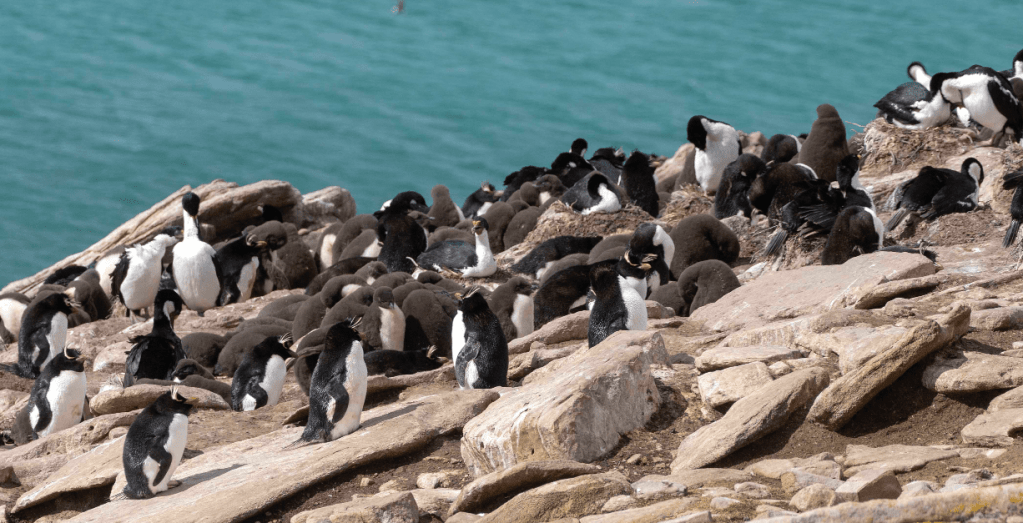
The ship arrived in the Falklands 12 hours ahead of schedule and was moored off of West Point Island — a privately owned farm and a popular shore excursion for cruise ships. The morning plan was to zodiac to a pier on the island, followed by a roughly mile hike to Devil’s Nose point — a rocky promontory housing a Rockhopper Penguin and Black-Browed Albatross nesting commune. Afterwards, we would be treated to a proper English tea with all the fixins by the owner of the island at his lovely farm home. English tea with penguins and albatrosses! That was not on my Antartica bingo card.
Since this was our first excursion we weren’t quite sure how to dress for the conditions, so we overdressed for temperatures in the upper 50s. Putting on the PFD posed another challenge: “which opening does my head go through?.” Once we solved the Mensa test of putting on the PFD, we walked through a pan filled with Virkon, swiped our ship ID cards to check out, and got on the gangway to wait our turn. The conditions were a little rough and the choppy waves were making the zodiac rock up and down. With no fewer than three people maintaining a sailor’s grip on our arms, we managed to get onto the zodiac without seriously maiming ourselves. With 25-30 mph winds whipping around us, we all kept our heads down trying unsuccessfully to avoid getting sprayed on our face.
Devil’s Nose Tea Party
Onshore, we had a choice to do a “short” hike or take a Jeep ranger to Devil’s nose. We opted to hike thinking we can handle this no problem. The hike was uphill, against a stiff wind and more tiring than we expected especially walking in clunky boots. But when we entered the nesting grounds (after stepping into a Virkon bath first, of course) all was quickly forgotten. We were just a few feet from a colony of elegant Black-Browed Albatrosses co-existing with their punk rocker Rockhopper Penguins neighbors. The small cramped area was already crowded, so we jockeyed for position, stepping on rocks to get a peak over the tall tussock grass. We stood there and watched as the penguins delighted us with their antics as they hopped from one rock to another.
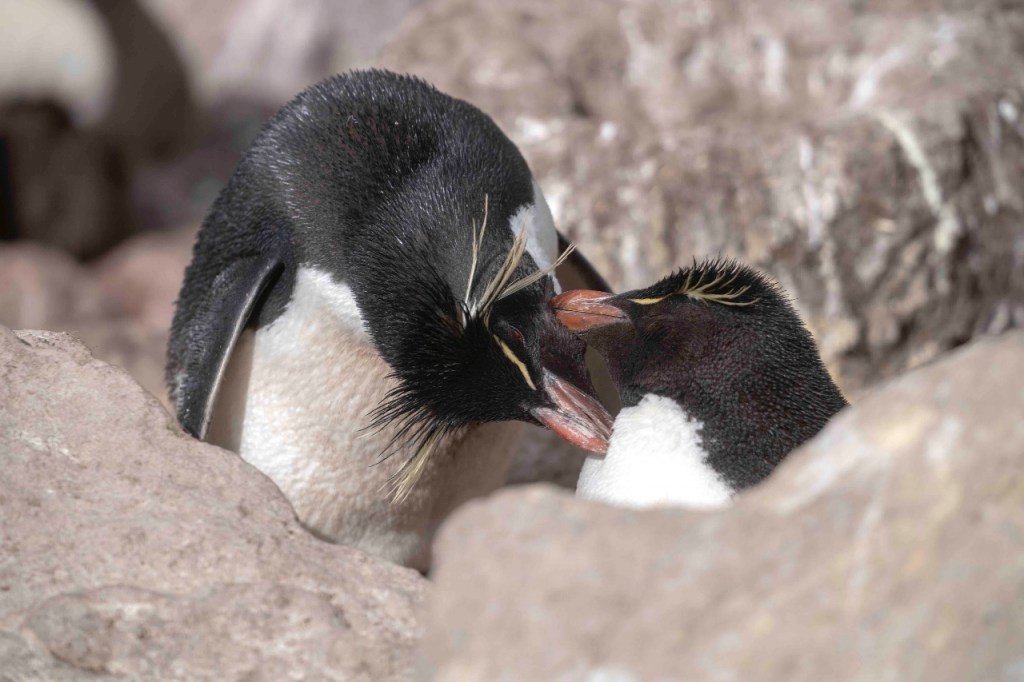
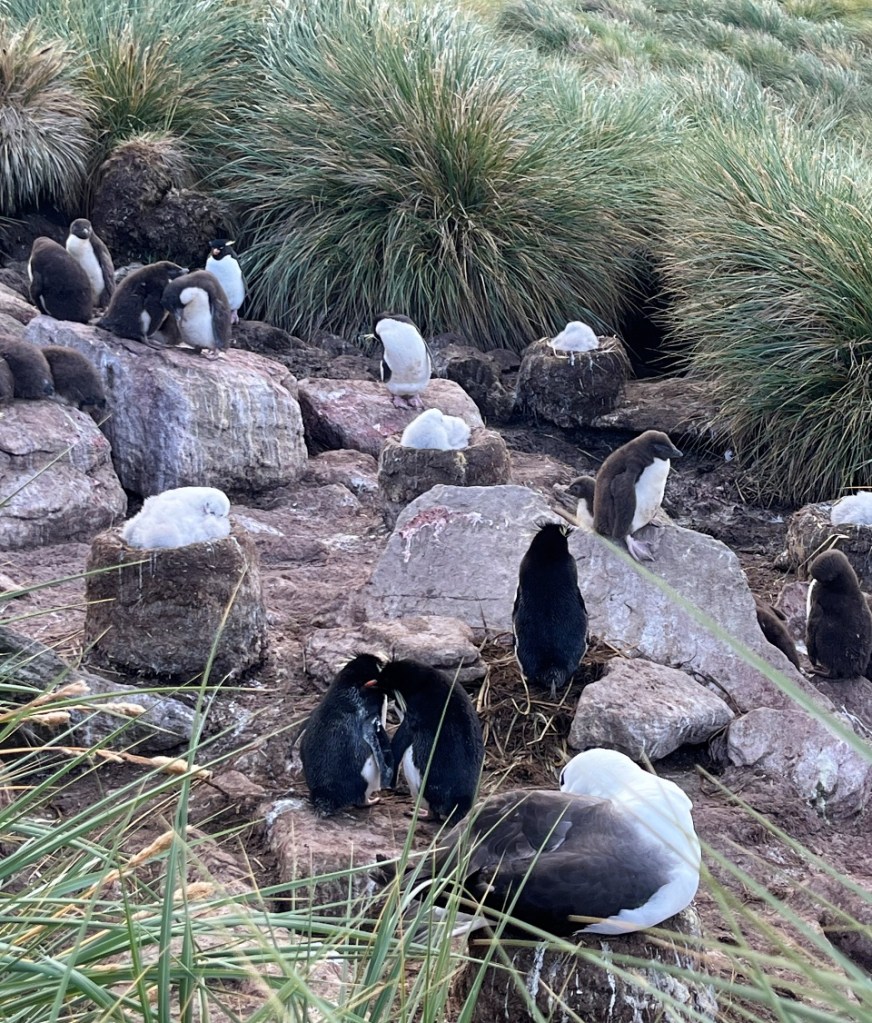
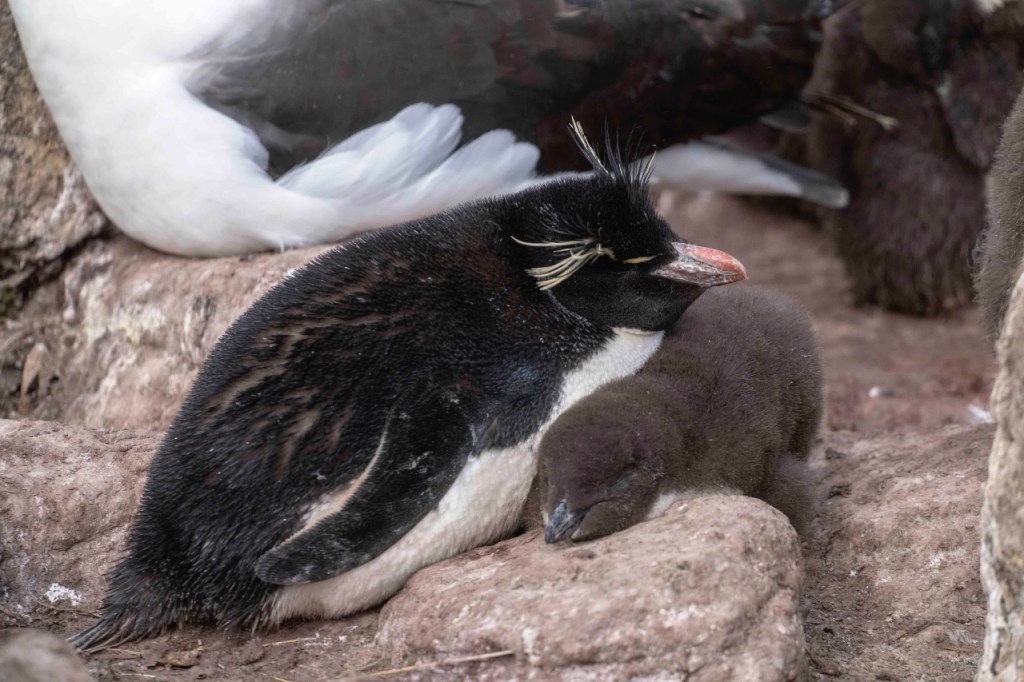
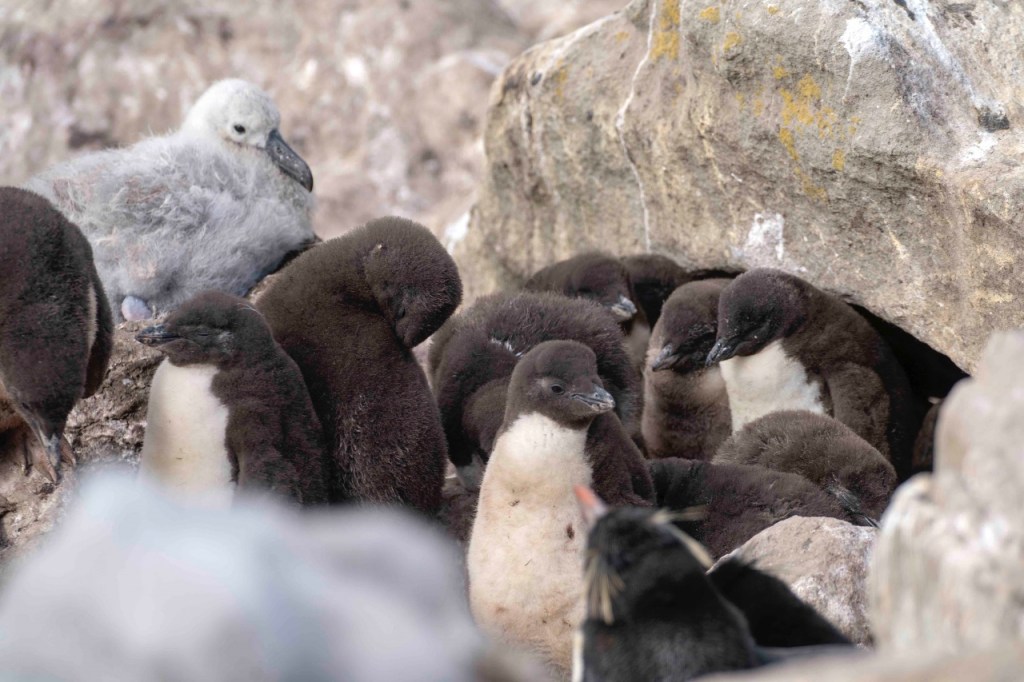
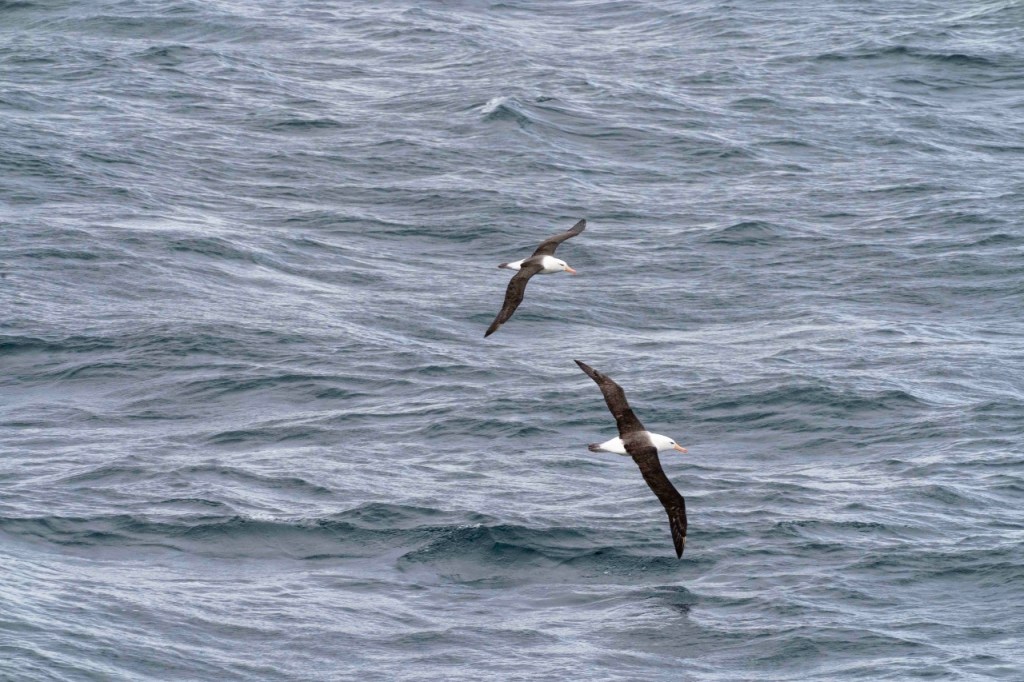
We marveled as albatrosses took flight against the stiff wind and awed at their adorable white fluff-ball chicks cuddled in their pedestal nests. We slowly made our way through the tussock grass as we stopped to take in different viewpoints. It started to hail and decided this would be a good time for some hot tea.

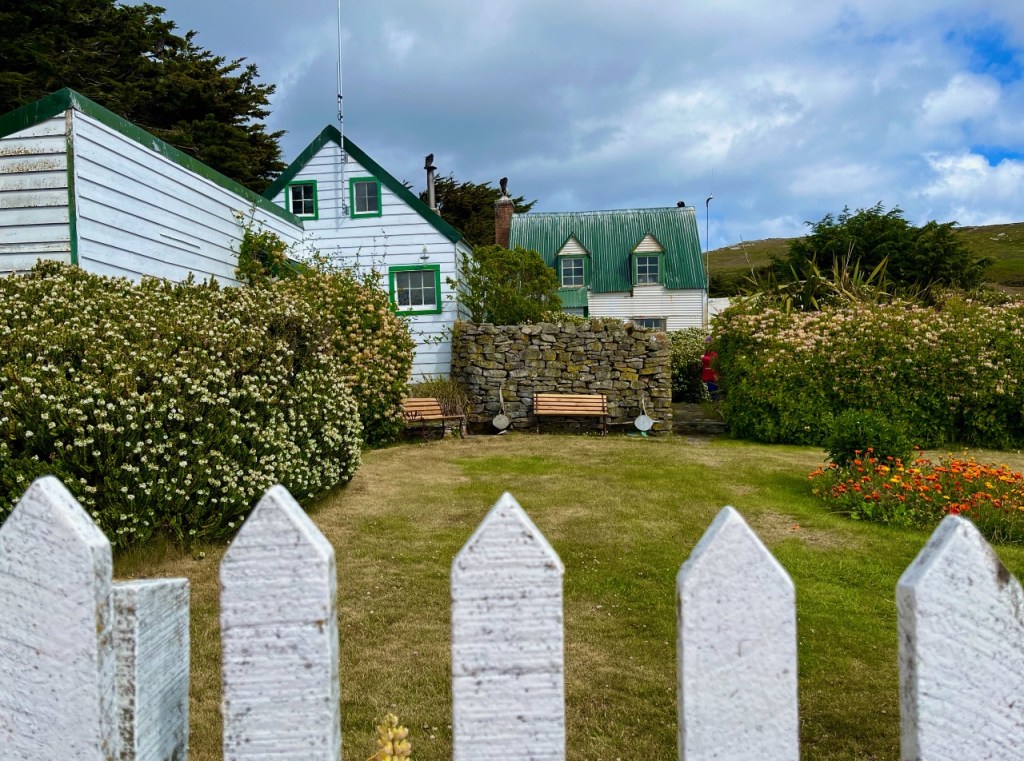
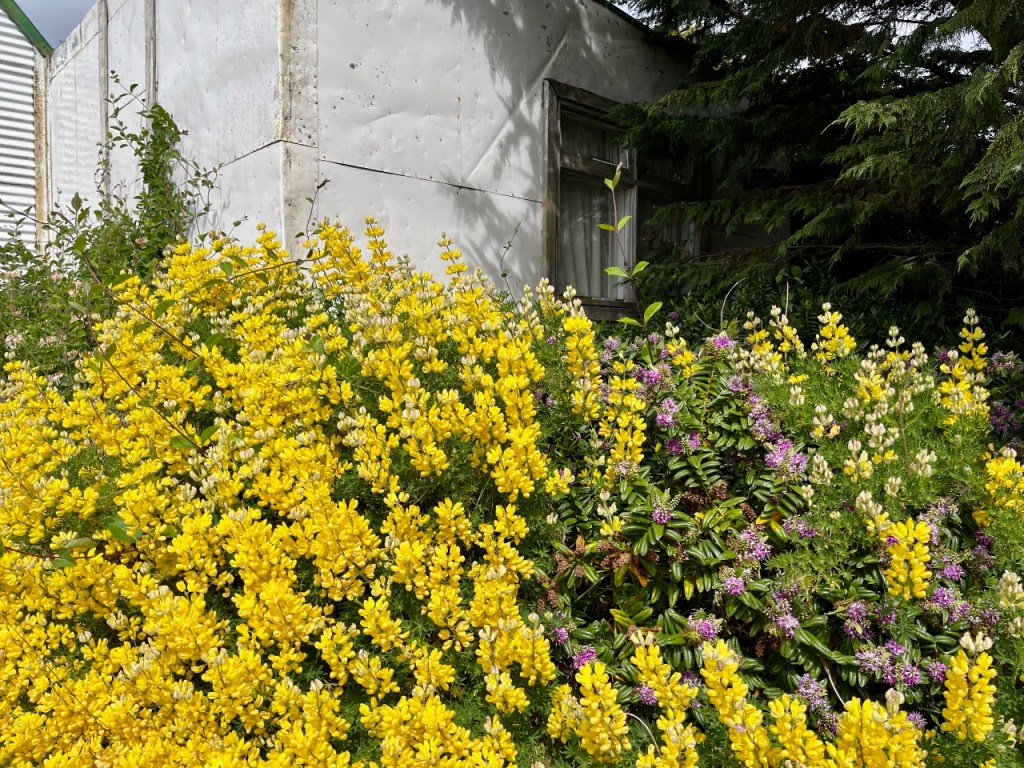
After a blustery hike down in rain with the occasional hail, we entered the farmstead to find ourselves transported into a delightful sunlit English Garden straight out of a Jane Austen novel. Surrounded by trees and fragrant, flowering shrubs, the sun bathed us in its welcome warmth. Inside the front room, there was a table spread with all types of cookies and cakes, and tea served by our generous host on fancy teacups on saucers.

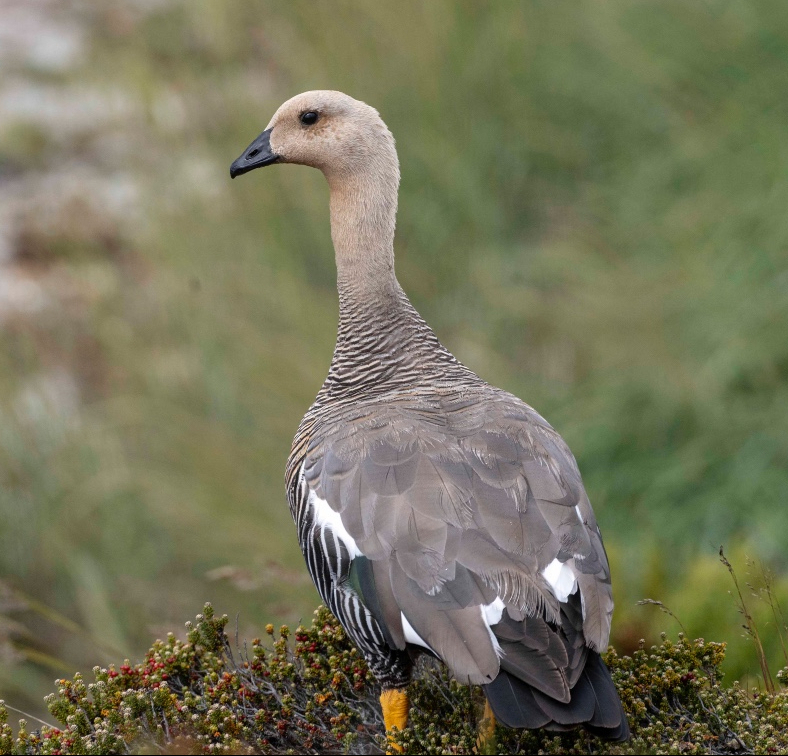

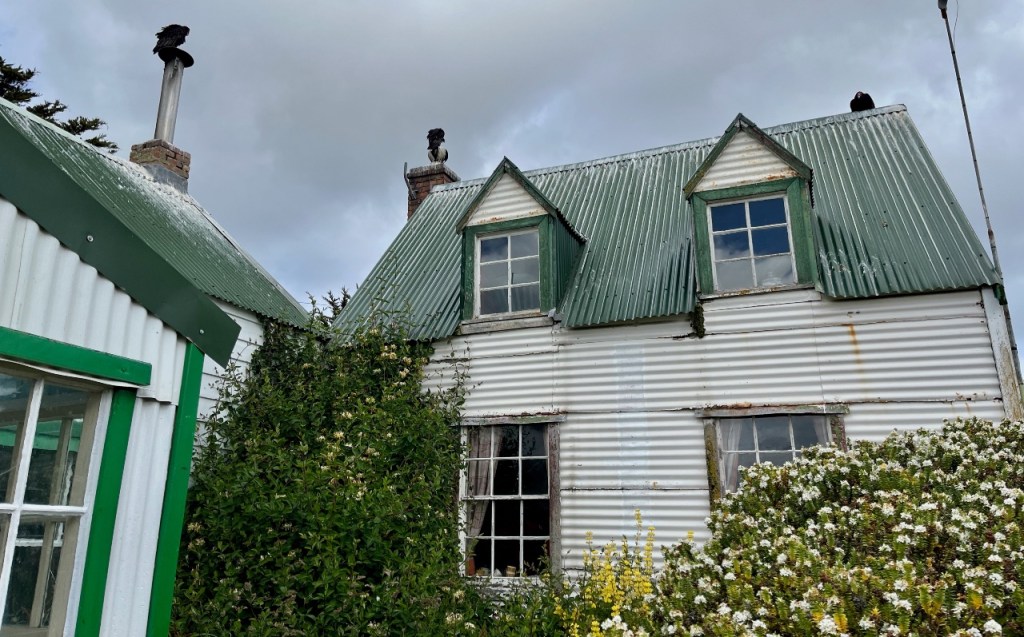
We sat at one of the picnic tables enjoying our treats under the bright Falkland sun, being closely watched by three hungry turkey vultures. Suddenly, our Jane Austen scene morphed into a dark Brothers Grimm fairytale.
We returned to the ship which again involved three helping hands, a biocide dunk, the card swipe to check back in, and a meticulous scrubbing of our rubber boots to pass inspection by our trip leaders. About 10 people were called over the ship-wide intercom and forced to do the mudroom walk of shame to clean their boots again.
Make Way For Penguins
During lunch, the ship moved eastward to our next destination, Saunders Island, a working sheep farm but also home to four species of penguins: Gentoos, Magellanics, Rockhoppers, and King penguins, as well as non-waddling birds: giant petrels, skuas and shags.
This time we were going to do a wet landing meaning we would have to step into the water to get to shore. As we approached the shore, Jonathan and two other crew members, outfitted in some type of Aquaman dry suit, fearlessly plunged into the surf, expertly guiding the zodiac toward the shore. With the boat steadied, we slid to the bow and awkwardly threw our legs over and rolled off the boat. The water was ankle-deep and we praised the Bog gods for the waterproof boots.
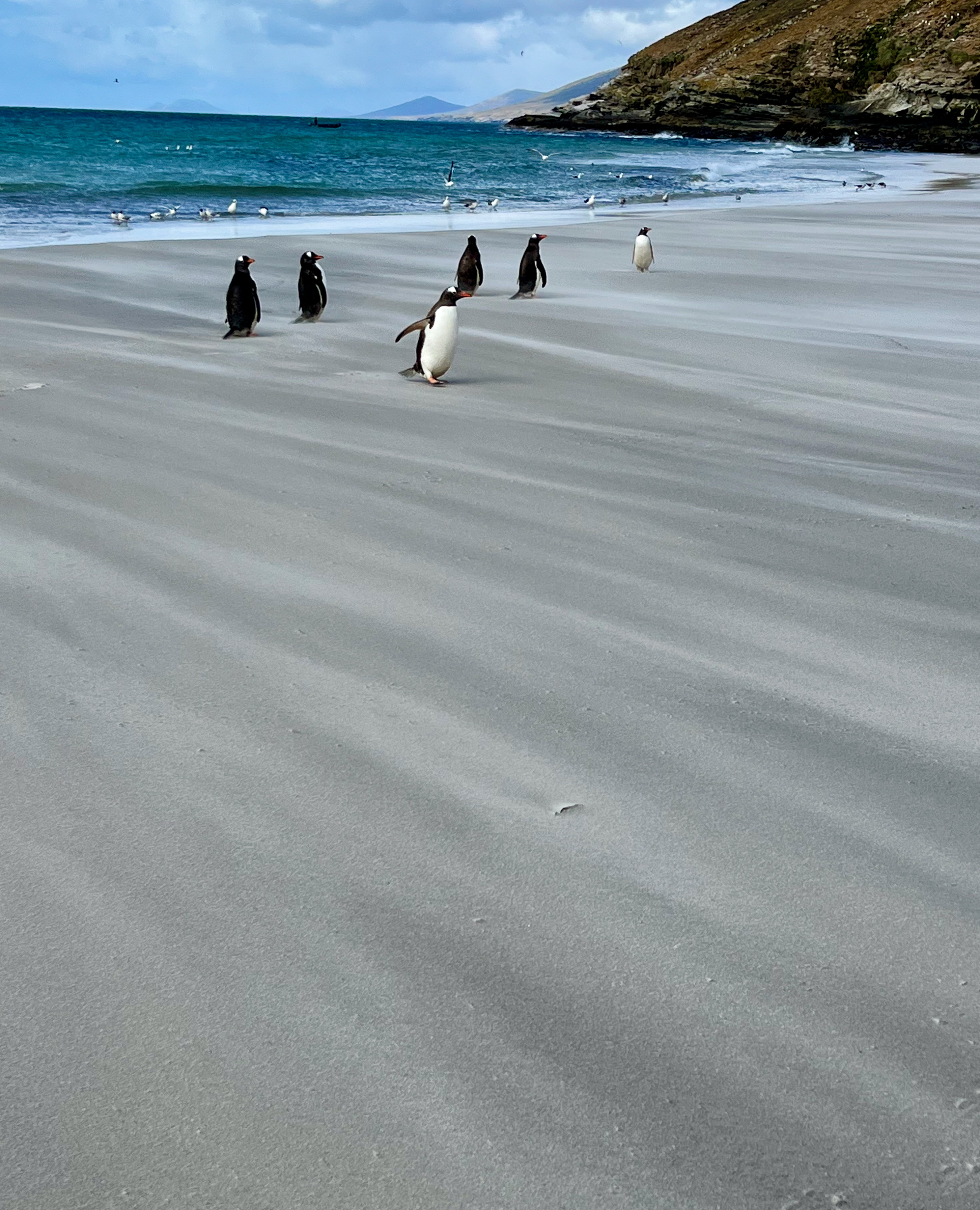
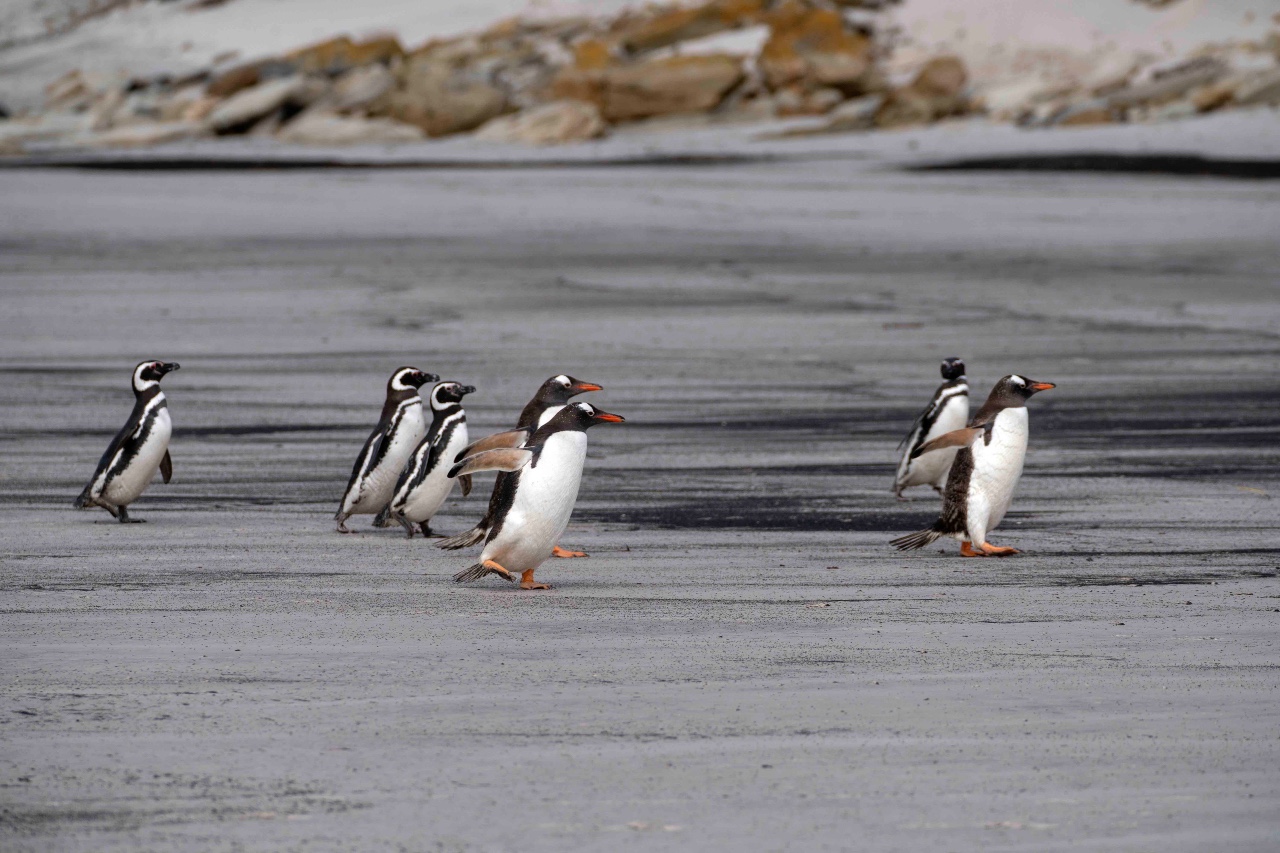
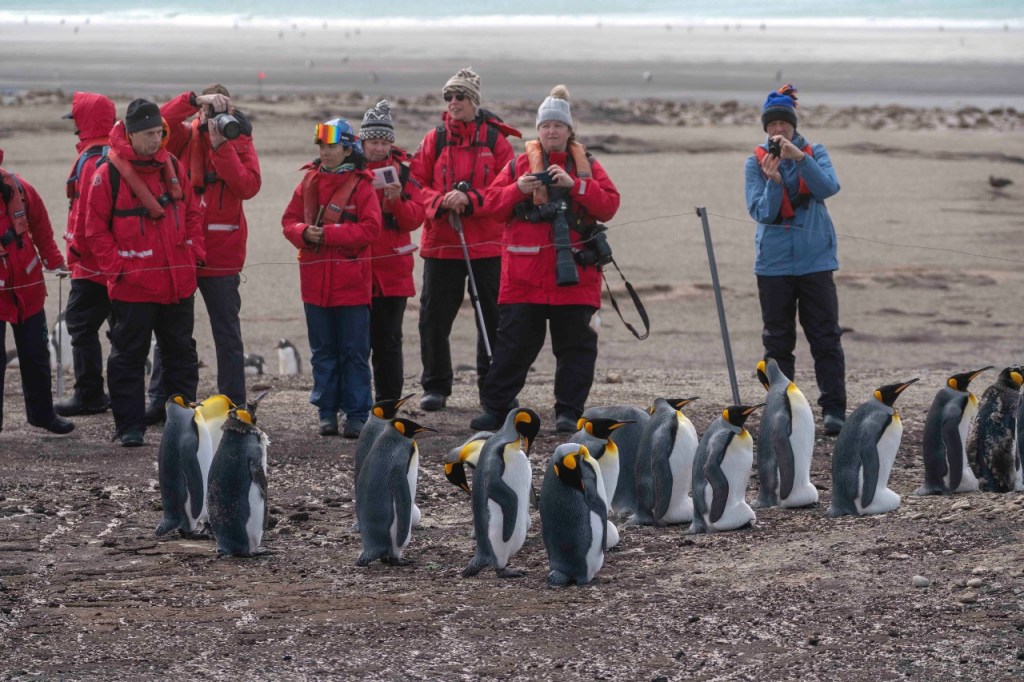
On the beach, there was a blur of red parkas taking pictures of Magellanic penguins walking to their hillside nest. Although the group was keeping the requisite 15 feet away, they were too busy taking pictures to notice that they inadvertently formed a circle, essentially blocking the penguins’ path. The bewildered penguins weren’t sure which way to go as they looked around, turning and twisting, seeking another path up. Only when a staff member asked the group to clear a path did the group finally move to make way for the penguins.
Noble Kings & Klepto Gentoos
It was hard to know where to begin our exploration. Penguins were everywhere. There was a sandy nesting area on the right covered with Gentoos and Kings, a Rockhopper nesting area on the rocky shores to our left, and an Imperial Shag and Rockhopper nesting site on the cliffs above the beach. We decided to hang with the Kings since the last time we saw them was on Terra Del Fuego Island in Chile and we couldn’t get closer than 50 feet. So this was our opportunity to see royalty up close.
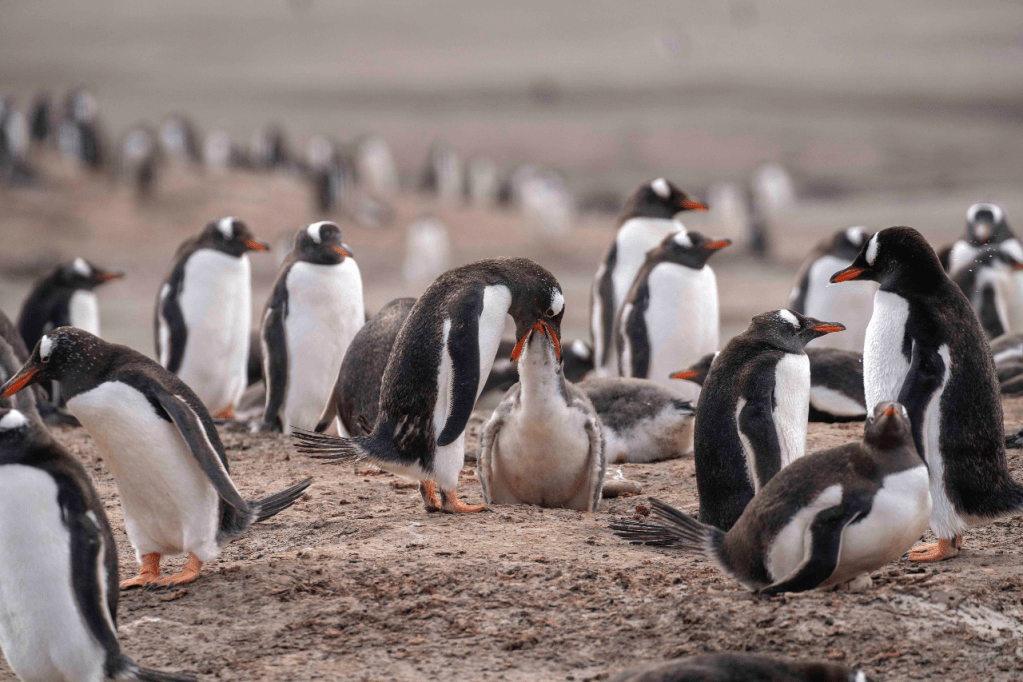
Despite ropes set up around the nesting area, we found ourselves within 10 feet of both Gentoos and King penguins. The Gentoos with their distinctive orange beaks and white eye patches meandered about, some feeding fully grown chicks while others amused us by stealing pebbles from their neighbors’ nests. Even without eggs or chicks to attend to, these little kleptomaniacs couldn’t resist the urge to swipe pebbles from their neighbors.
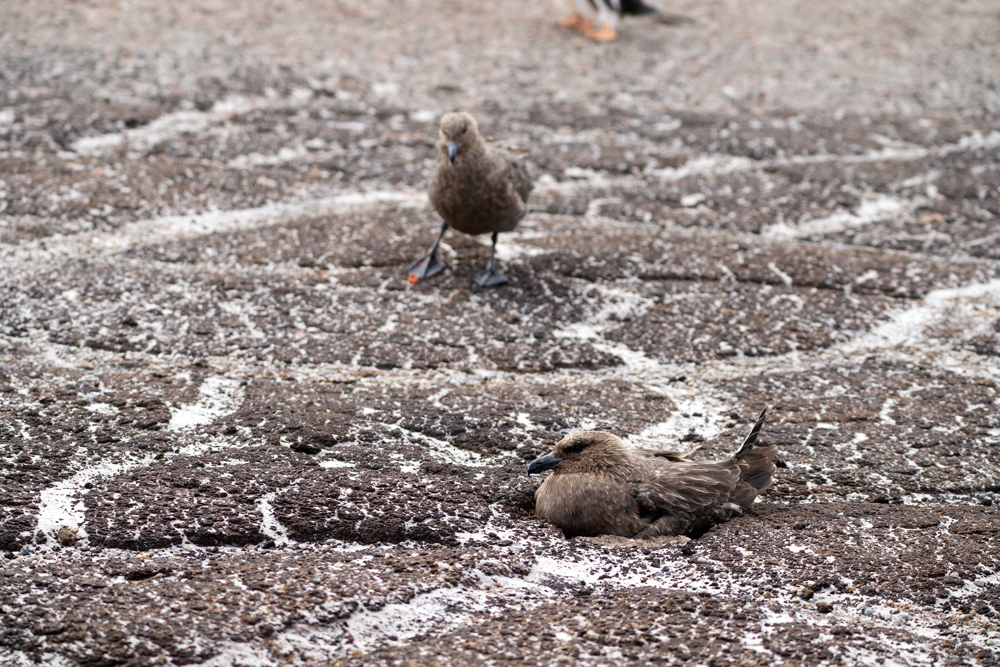
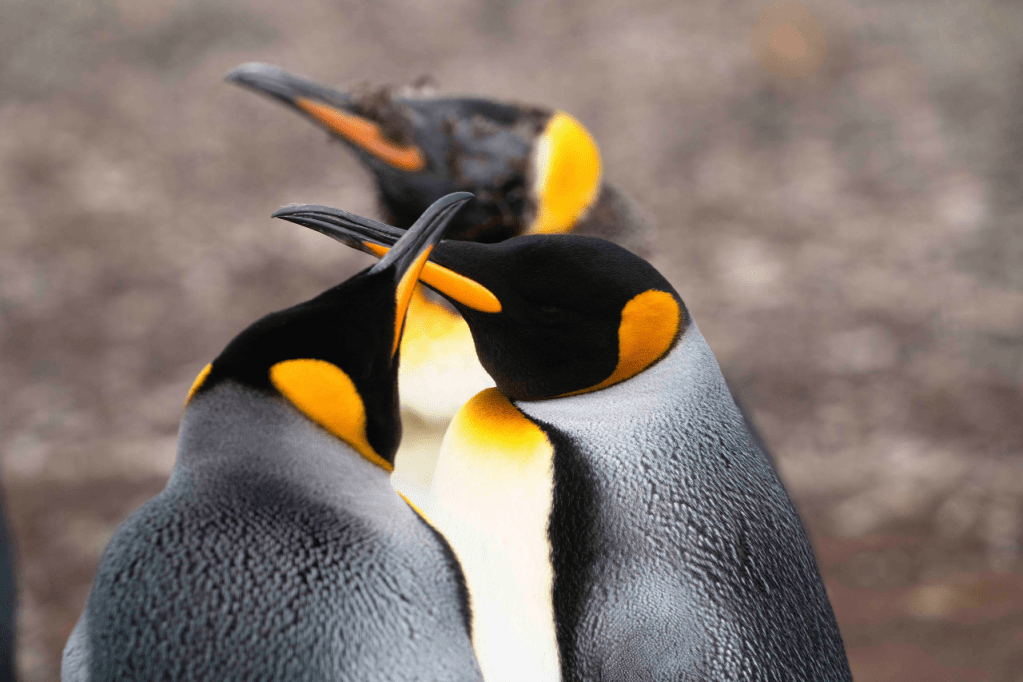
The majestic Kings, exuding grandeur, were fewer in number, and clustered in a tight group, most of them standing motionless with their bellies draped over their still unhatched eggs. Up close they were even more stately with orange plumes decorating their heads, though there were a few who were undergoing their catastrophic molt, looking rather shabby and quite miserable. As we were leaving, we were told to be careful to not trip over the lone skua that was incubating an egg.
Next, we made our way to the upper shag and rockhopper nesting site on the cliffs, where we passed a frankenwhale skeleton and sheep grazing in the hills while the penguins went about their business. What a surreal scene.

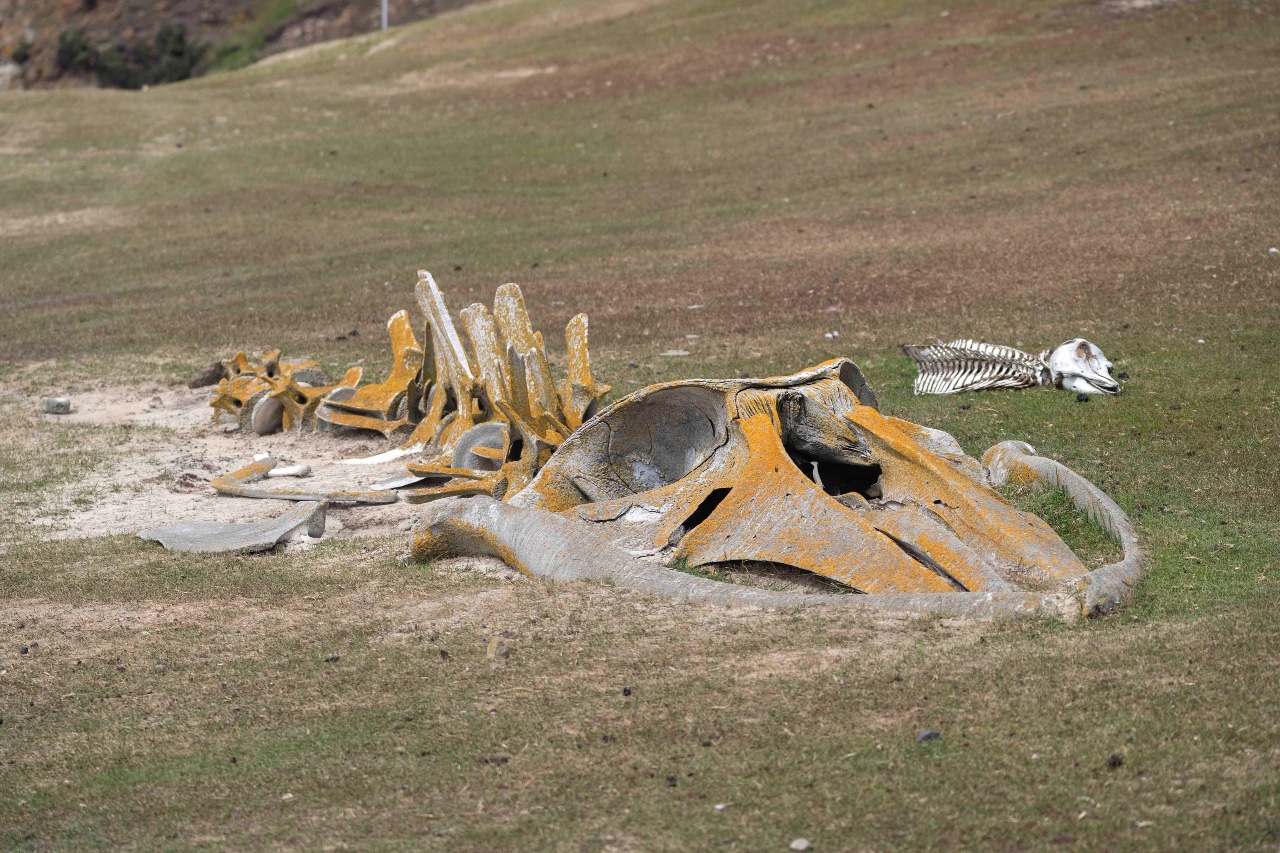
On the cliffs, there were lots of penguin chicks, but no shag babies, yet. Skuas and giant petrels kept swooping down attempting to steal chicks or eggs, but the nesting birds vehemently pecked at the intruders to prevent them from landing or grabbing any chicks.
Surf’s Up
The scene on the lower slopes was where most of the action was happening. People there were ignoring the rockhoppers on shore and kept their attention out on the water. What they were looking for we weren’t sure until we saw a series of splashes.
They were watching rockhoppers swimming and porpoising, returning from their feeding grounds. We stood captivated as waves upon waves of Rockhoppers torpedoed through the water, surfed the last few feet, went under briefly, and then launched themselves upright to land on their feet on a rock or the beach. This went on for a while and we could have watched all day.

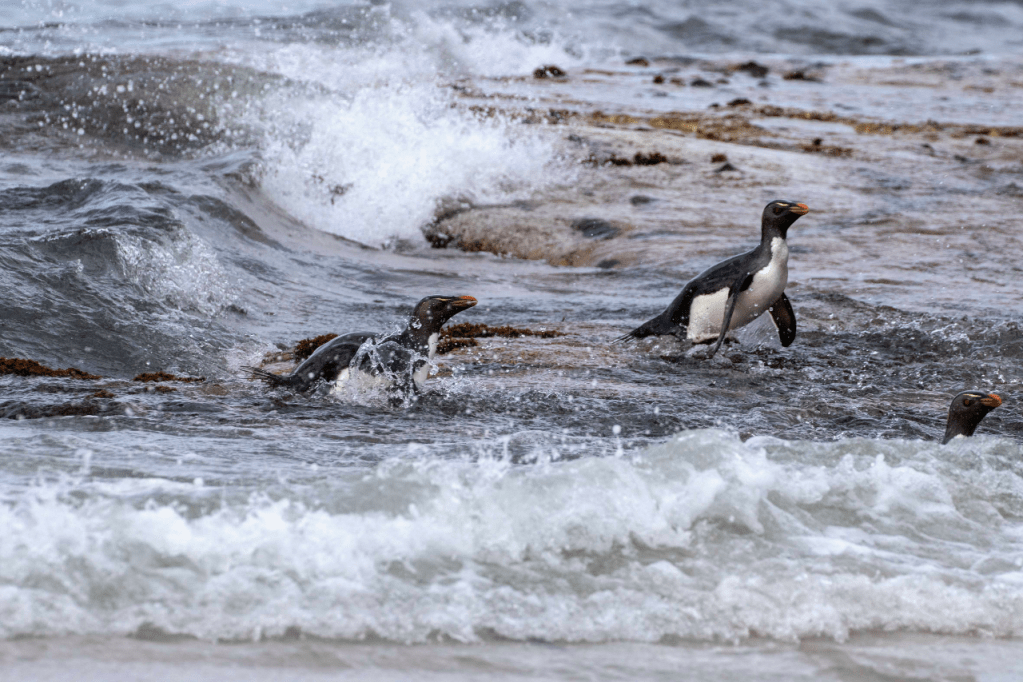
Reluctantly, it was time to go back to the boat, navigating the three handholds, the card swipe, the biocide plunge, and the boot inspection but it was worth it in the end.
It was a good day and overall the group was respectful to the animals. Sadly, during the evening recap, we heard about someone lying down to take pictures and another wandering off in a closed area. This is why we can’t have nice things.
Random Notes:
While boarding the zodiac to return to the ship from Saunders, the water rose above my knees and infiltrated the inside my boots. I swapped them for another pair and discovered I was wearing a size 40 boot. No wonder water got inside and I had a hard time walking. The rest of the trip I had no problem with water entering the boots and walking with them was much more comfortable. So the lesson is to double check the size of the boots you are given.
 It's Opener There
Leave a comment