Thursday January 25th 2024
Whalers Bay
South Shetland Islands
Expedition Morning
06:45 Wake-up call
This morning, depending on wind, weather and ice conditions, we plan to have a landing at Whalers Bay.
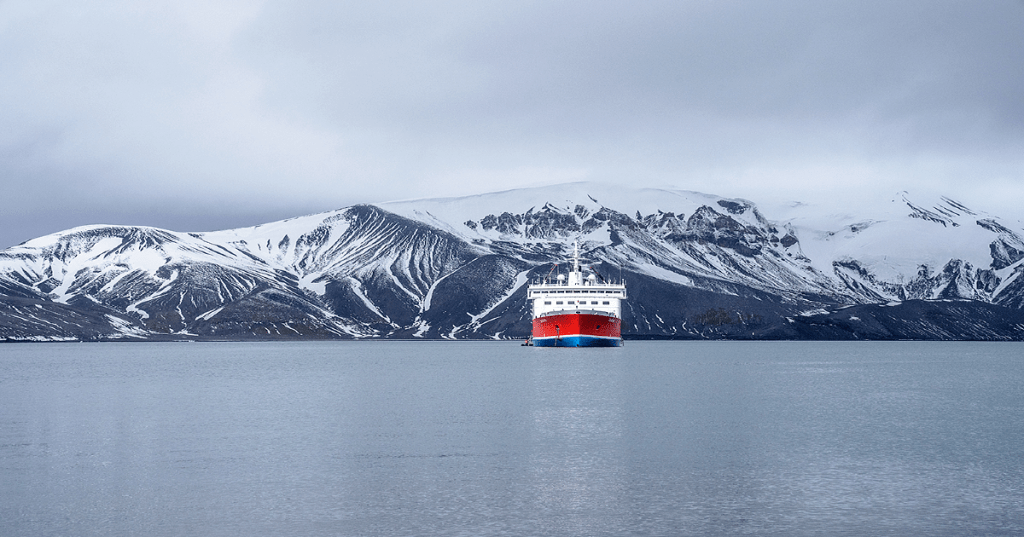
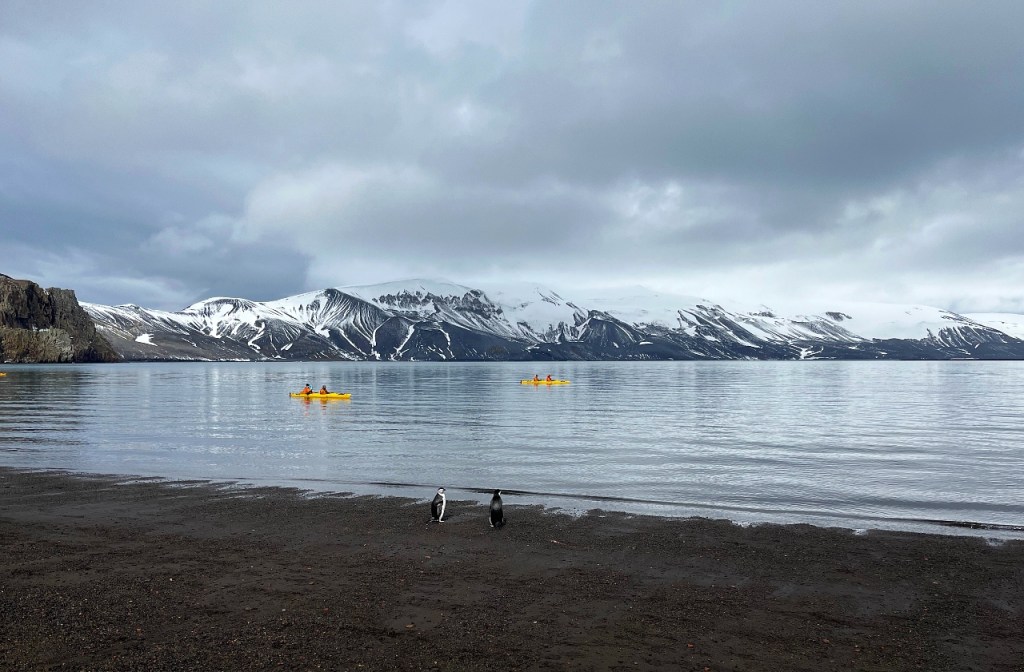
As we slipped through the narrow slit of Neptune’s Bellows at Deception Island, we found ourselves gliding through the calm waters of a collapsed volcano. Towering black volcanic walls loomed around us. Sooty beaches lined the shore, while wisps of steam curled lazily upward from underground vents, adding an eerie touch to the landscape. We were entering the sunken, flooded caldera of an active volcano, a place that looked more like the moon than the Antarctica of NatGeo Fame.
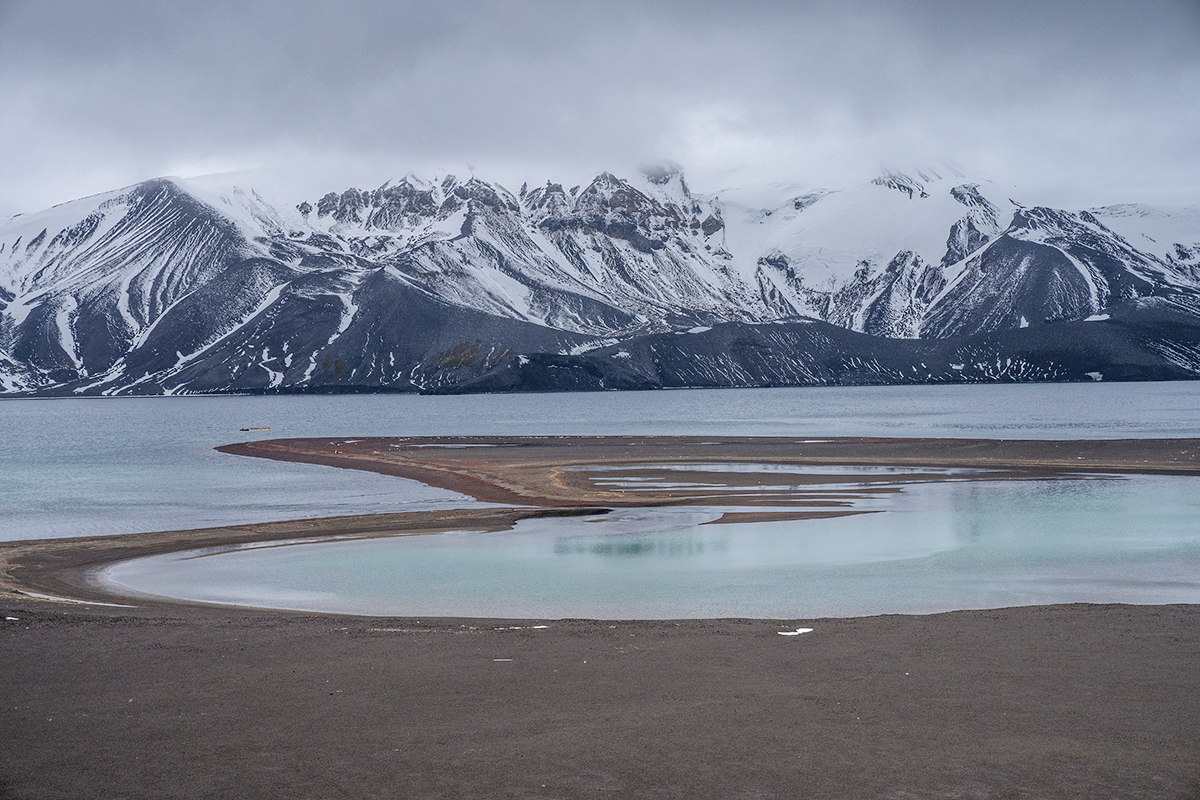
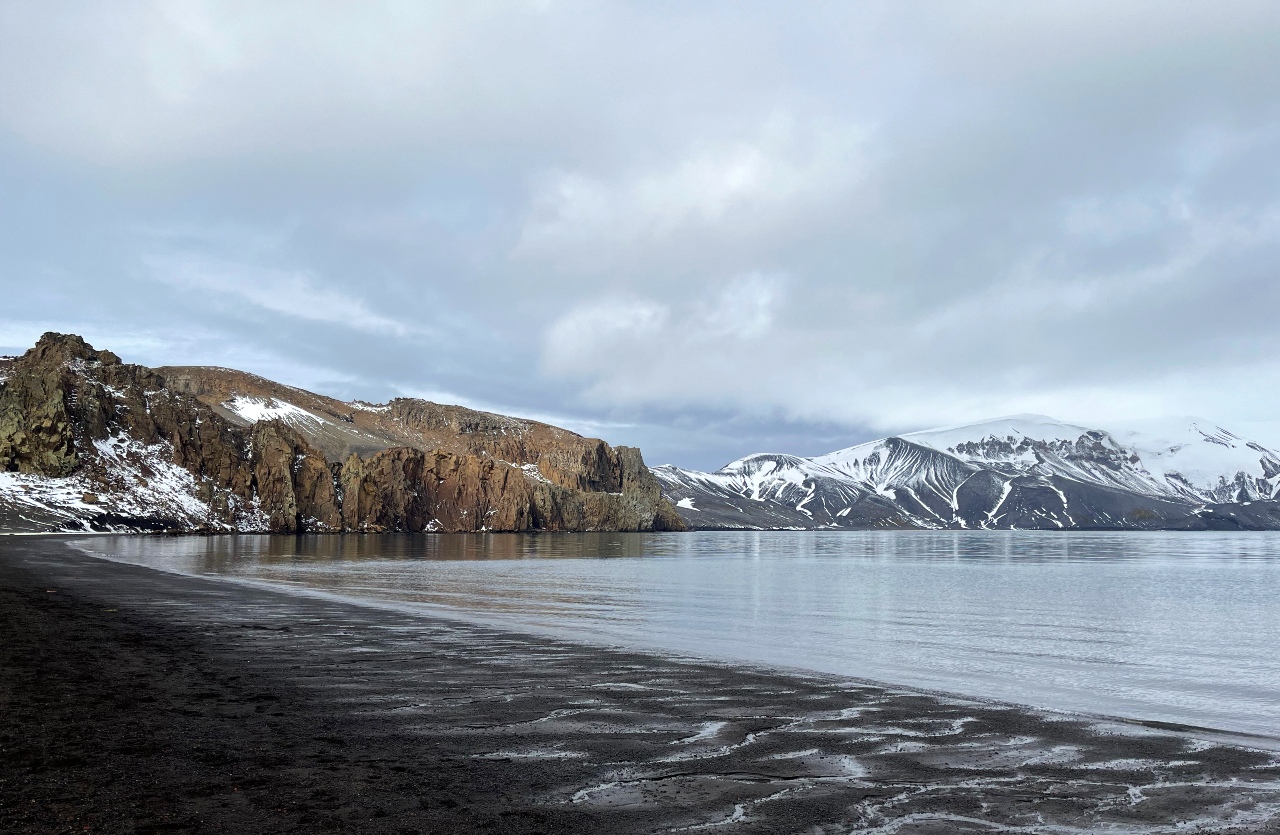
Deception Island got its name because, to early explorers, it appeared to be just a regular humdrum island. It wasn’t until an American explorer—who, surprisingly, didn’t name it after himself—discovered the narrow entrance of Neptune’s Bellows that led into the flooded caldera, giving it the fitting name of Deception. Once discovered, the volcano was quickly colonized by humans—first for fur-sealing, then whaling, and most recently for scientific research. It wasn’t until two volcanic eruptions in 1967 and 1969 that human settlement finally ended. Now, it’s being overrun by cruise ship tourists like us.
What’s That Smell?
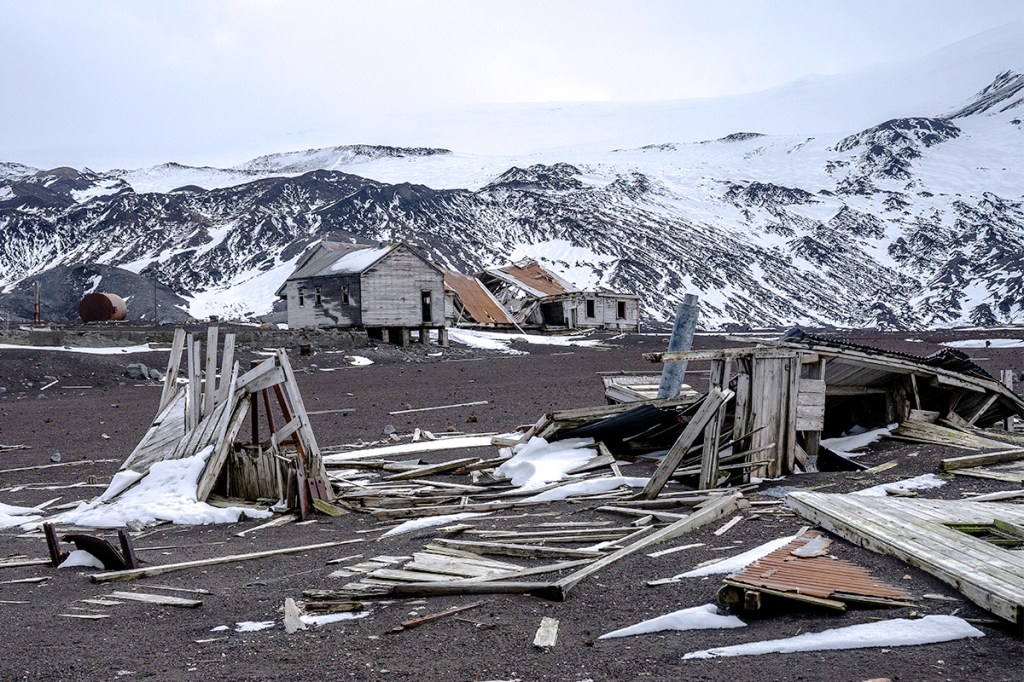
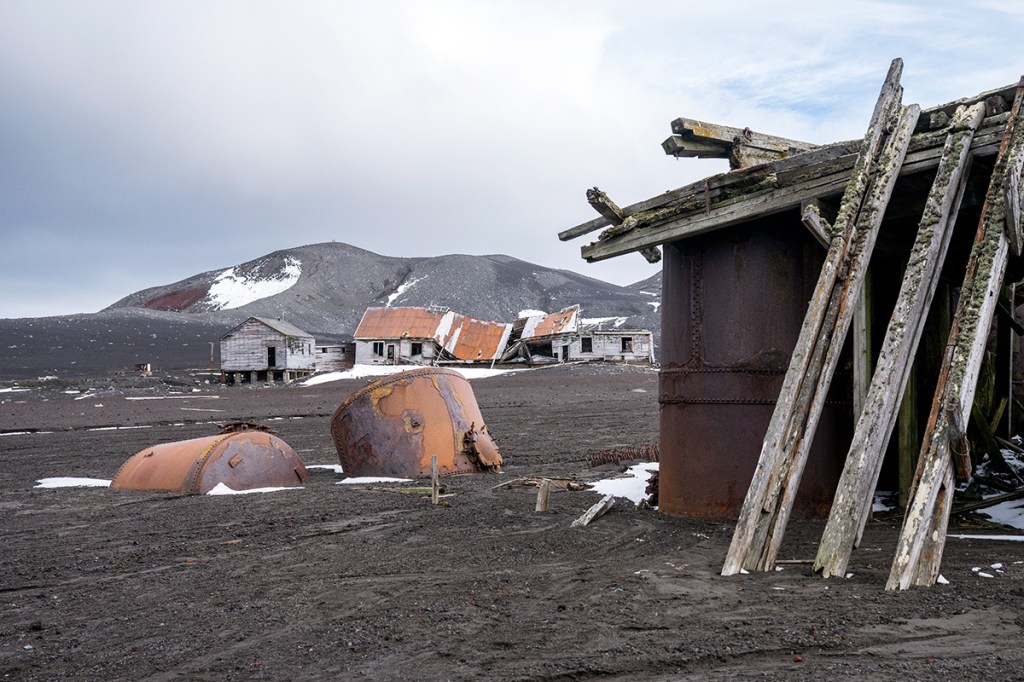
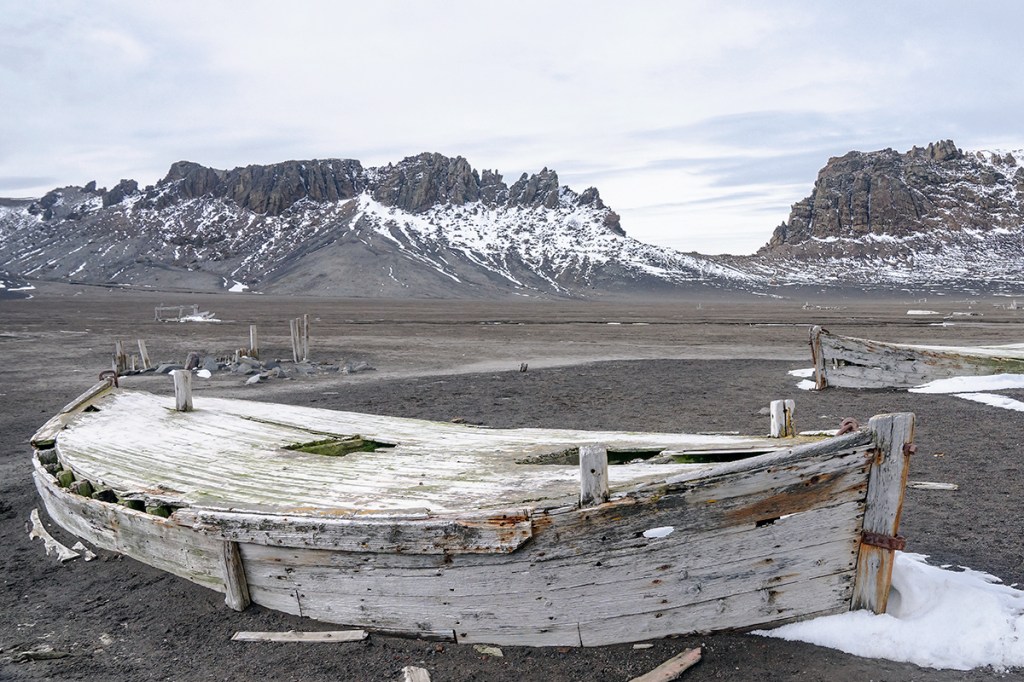
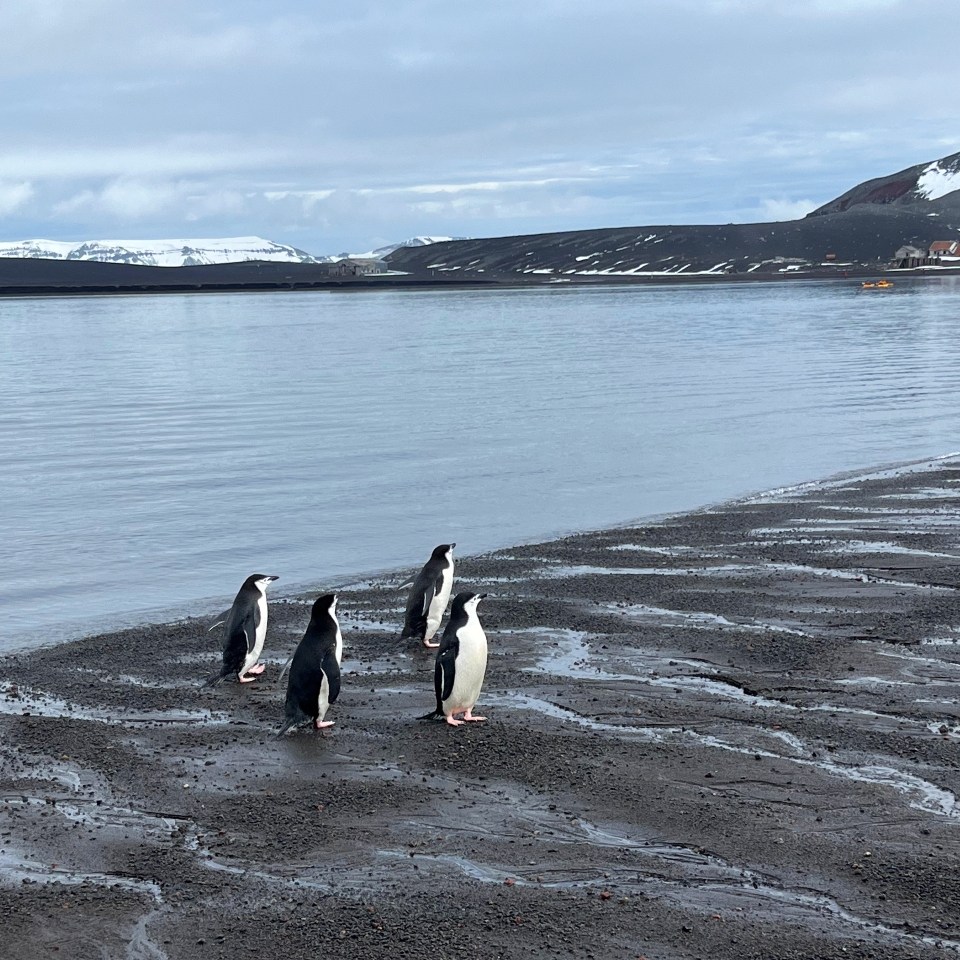
Our destination was Whaler’s Bay where the ruins of the Norwegian Aktieselskabet Hekto whaling station lie dormant and half buried. Antarctic fur seals and Chinstrap Penguins greeted us, along with the unmistakable stench of rotten eggs from the hydrothermal activity in the area. Or maybe it was Gus but he blamed it on the penguins.
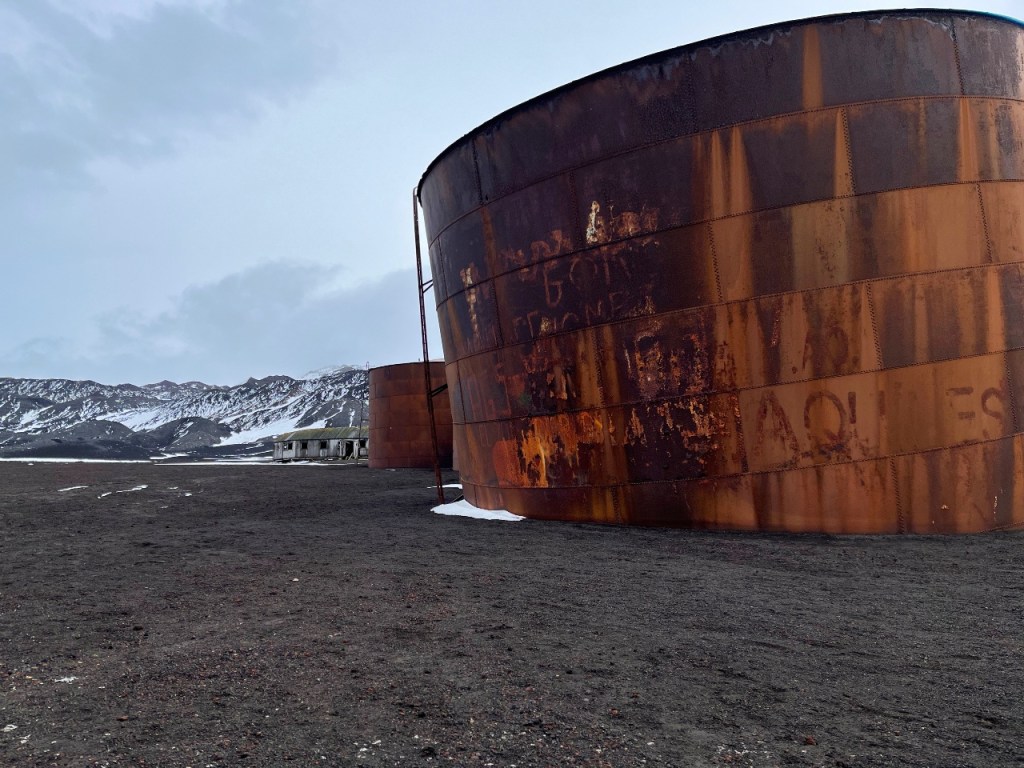
Storm (not a weather system, but a person—and yes, that’s her real name) led a hike up to Ronald’s Hill, which offered panoramic views of the volcano. The path wound past large rusted vats that once stored whale oil, discarded machinery that was used to extract the blubber, and decaying buildings. The hike was easy at first, but the last half-mile was like climbing a giant pile of coarse coffee grounds—French press grinds, of course. We scrambled up, slipping and sliding, until we finally reached the top. The view was worth it, though. We could see the whole caldera, a stunning mix of desolation and beauty.


After soaking in the views and catching our breath, we headed back down to explore more of the abandoned whaling station.
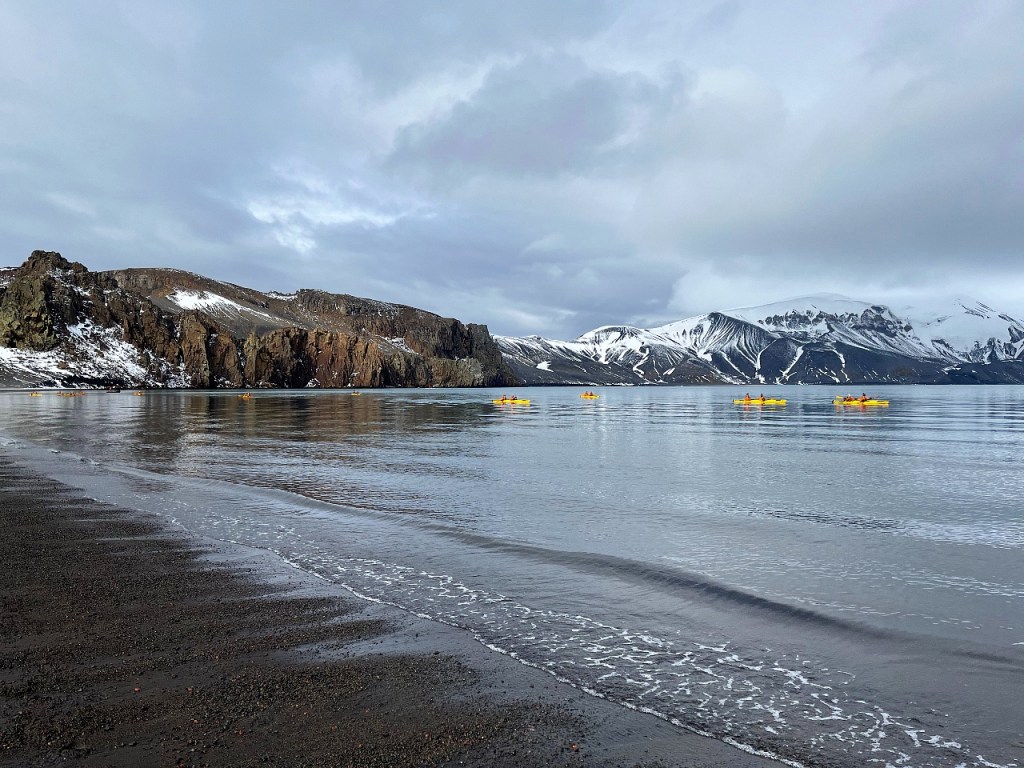
The kayakers, finally able to go out after many false starts, were slowly making their way around the caldera. The conditions were perfect, and we were majorly jelly.
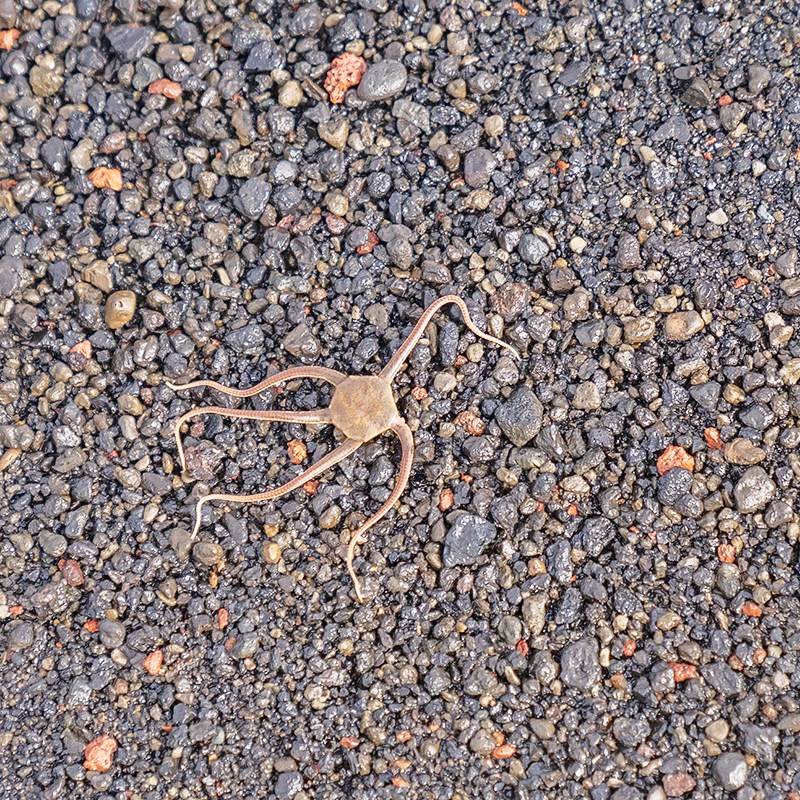
The beach was alive with these delicate brittle stars. Meanwhile, I spent the rest of the morning playing paparazzi with a group of Chinstrap Penguins.
The rest of the afternoon was spent in lectures while making our way to Port Charcot for tomorrow’s adventure.
Enjoy the delicate intricate movements of the Brittle Star
 It's Opener There
Leave a comment